Cloud Mastery 2026 #2 - Kubernetes, IaC, and Elixir in DevOps
Summary Report: “Cloud Mastery 2026 #2”
Event Objectives
- Build a practical foundation for Kubernetes architecture and day-to-day operations.
- Understand Infrastructure as Code (IaC) approaches on AWS with CloudFormation, AWS CDK, and Terraform.
- Explore Elixir and OTP as a unified approach for highly concurrent and fault-tolerant DevOps systems.
Speakers
- Bao Huynh - Session: Architecting for the Cloud with Kubernetes
- Nguyen Ta Minh Triet - Session: Elixir as a Unified Solution for Highly Concurrent and Fault-Tolerant DevOps Infrastructure
- Khanh Phuc Thinh Nguyen - Session: Infrastructure as Code with Terraform on AWS
Key Highlights
Session 1: Architecting for the Cloud with Kubernetes
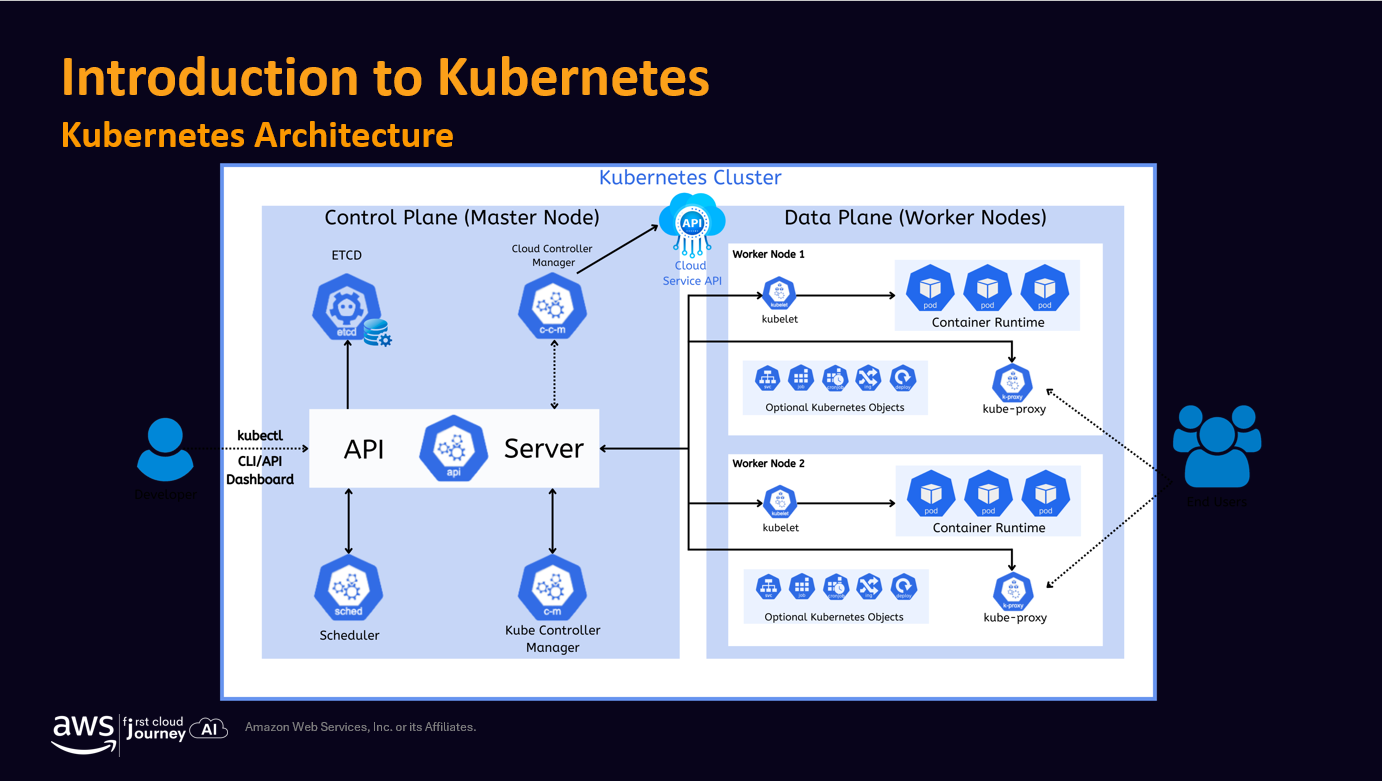
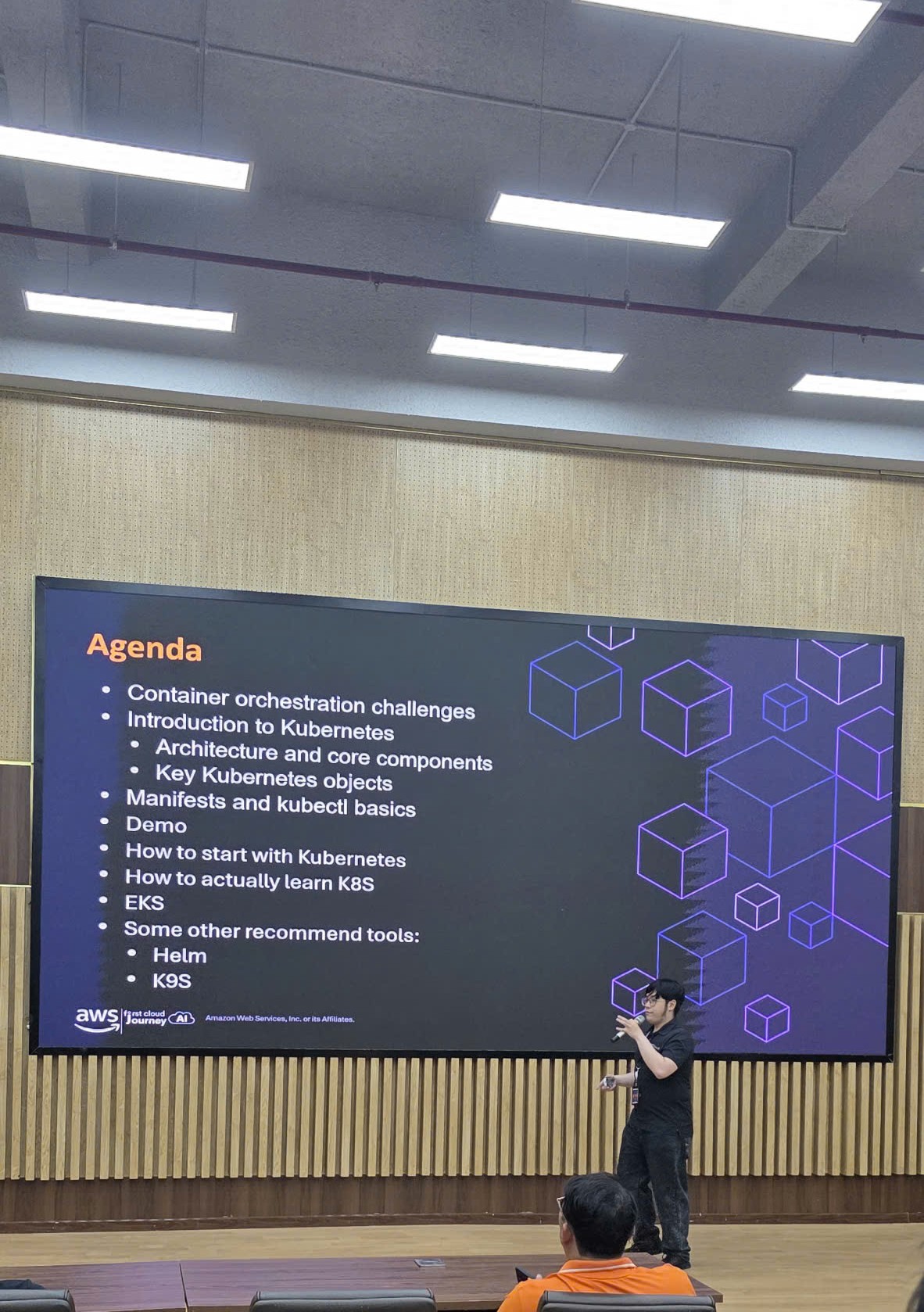
The first session introduced container orchestration challenges and explained why Kubernetes is the industry-standard platform for running containerized applications at scale.
Main takeaways:
- Core architecture: Control Plane components (etcd, API Server, Scheduler, Controller Manager, Cloud Controller Manager) and Worker Node components (kubelet, kube-proxy, container runtime).
- Essential objects: Pods, ReplicaSets, Deployments, ConfigMaps, Secrets, and Jobs.
- Operations basics: Kubernetes manifests (YAML) and commonly used kubectl commands.
- Learning path: Start locally with Minikube, K3s, or K3d, then move to managed environments such as Amazon EKS (which significantly reduces manual setup by fully managing the control plane). For a deeper understanding of underlying mechanics, Kelsey Hightower’s “Kubernetes the Hard Way” is highly recommended.
- Ecosystem tools: Helm for packaging/deployments and K9s for cluster observability and operations in the terminal.
This session helped connect conceptual Kubernetes knowledge with a realistic learning path that can be applied in both personal projects and production environments.
Session 2: Elixir for Concurrent and Fault-Tolerant DevOps Systems
The second session presented Elixir and the BEAM ecosystem as a strong option for building resilient backend platforms with high concurrency demands.
Main takeaways:
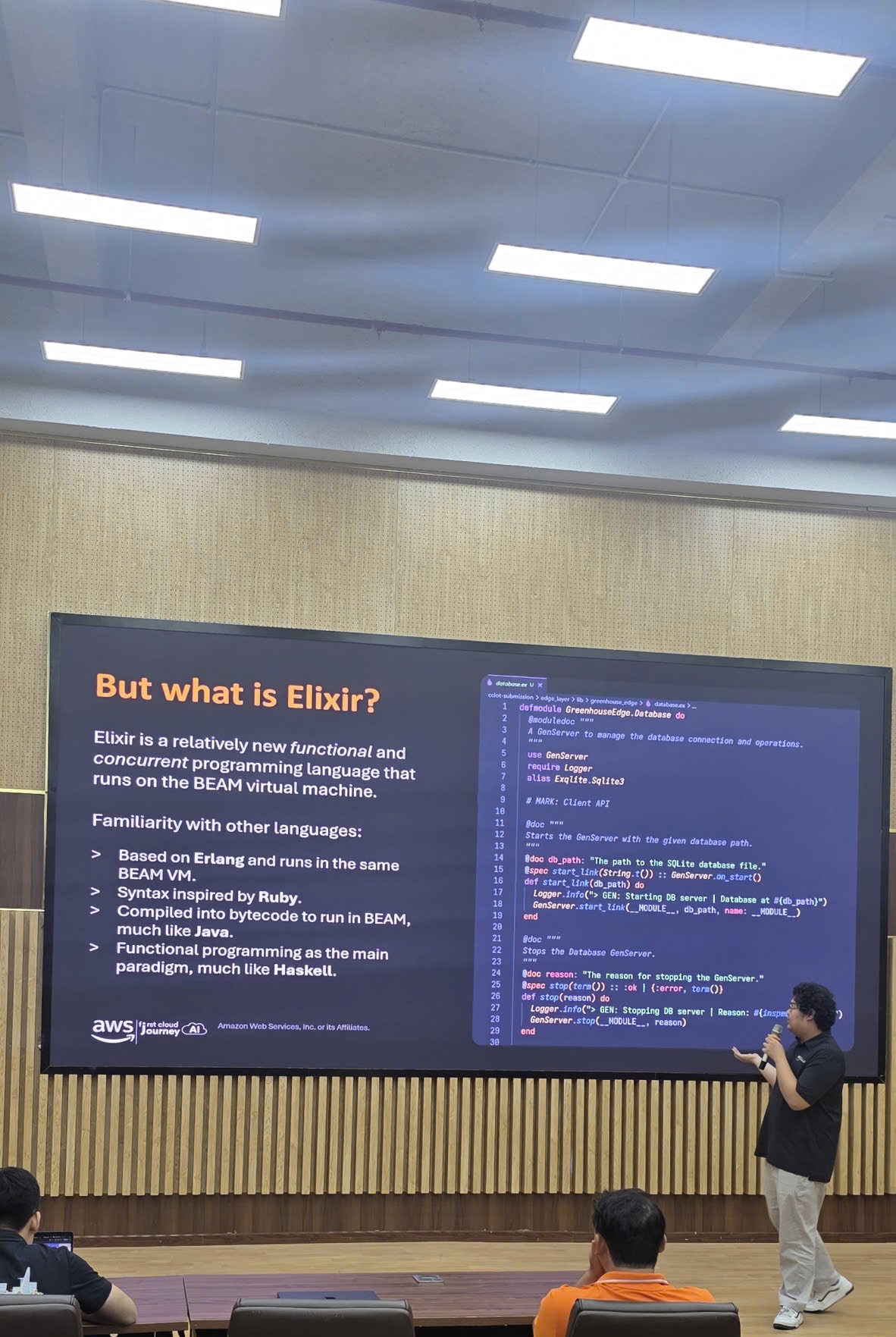
- Elixir fundamentals: Functional paradigm, immutable data, pattern matching, and Erlang/BEAM foundations. Elixir features a Ruby-inspired syntax but compiles to bytecode to run on the BEAM VM, much like Java.
- Concurrency model: Lightweight BEAM processes and scheduler-based execution for scalable workloads. A remarkable showcase of this is the Phoenix Framework, benchmarking up to 2 million WebSocket connections on a single server.
- Fault tolerance via OTP: Process supervision, “Let It Crash” philosophy, and robust runtime recovery.
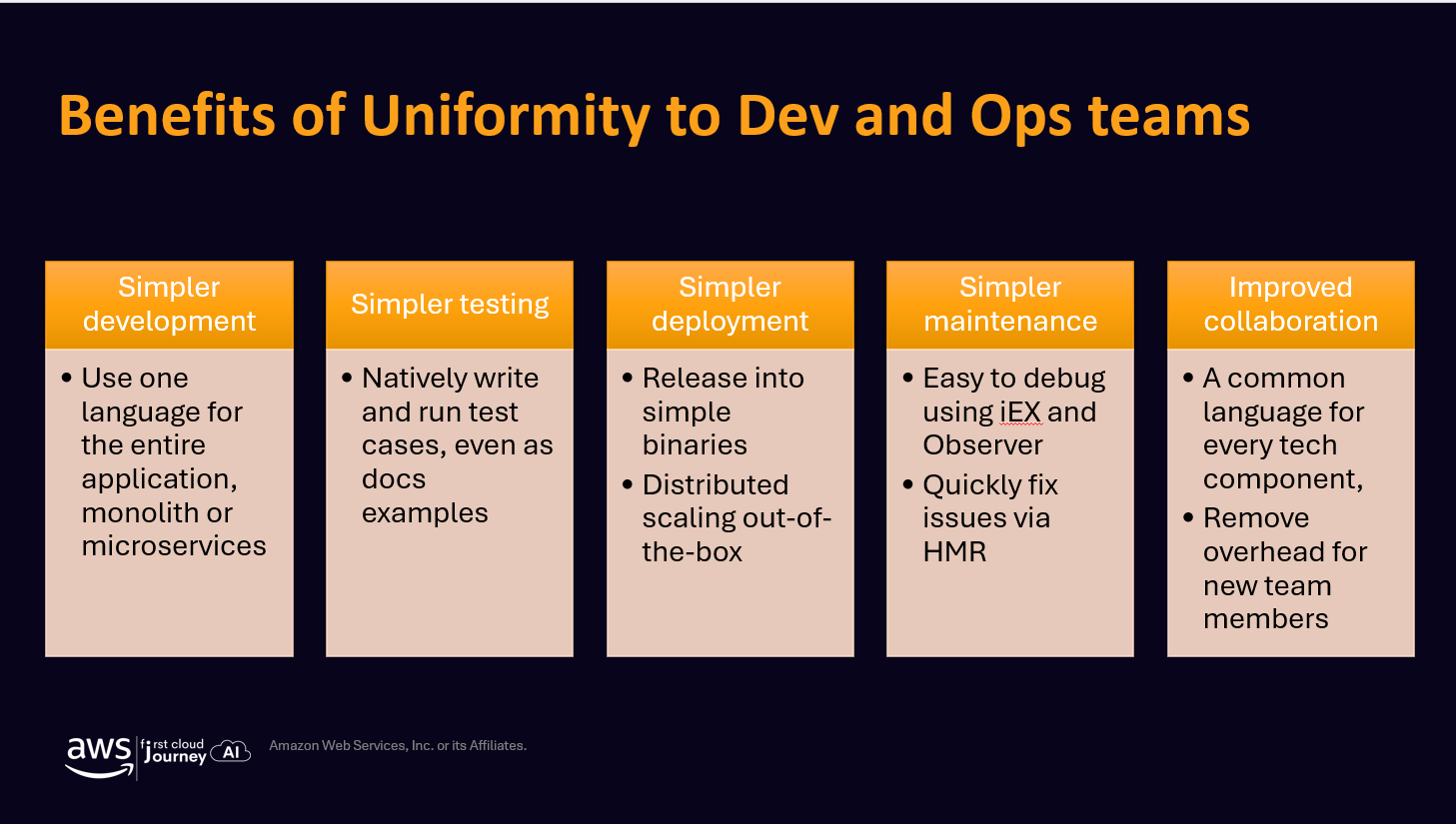
- Operational benefits: Integrated tooling (such as Mix and IEx) for development and operations, plus support for hot code upgrades (upgrading systems without downtime).
- Real-world impact: Production case studies showing significant cost optimization when moving high-throughput workloads from serverless architectures to Elixir services (e.g., rewriting an AWS API Gateway/Lambda Node.js service to Elixir dropped monthly costs from over $12,000 to under $400).
This session expanded the perspective beyond common DevOps stacks and demonstrated how language/runtime choice can directly affect reliability and infrastructure cost.
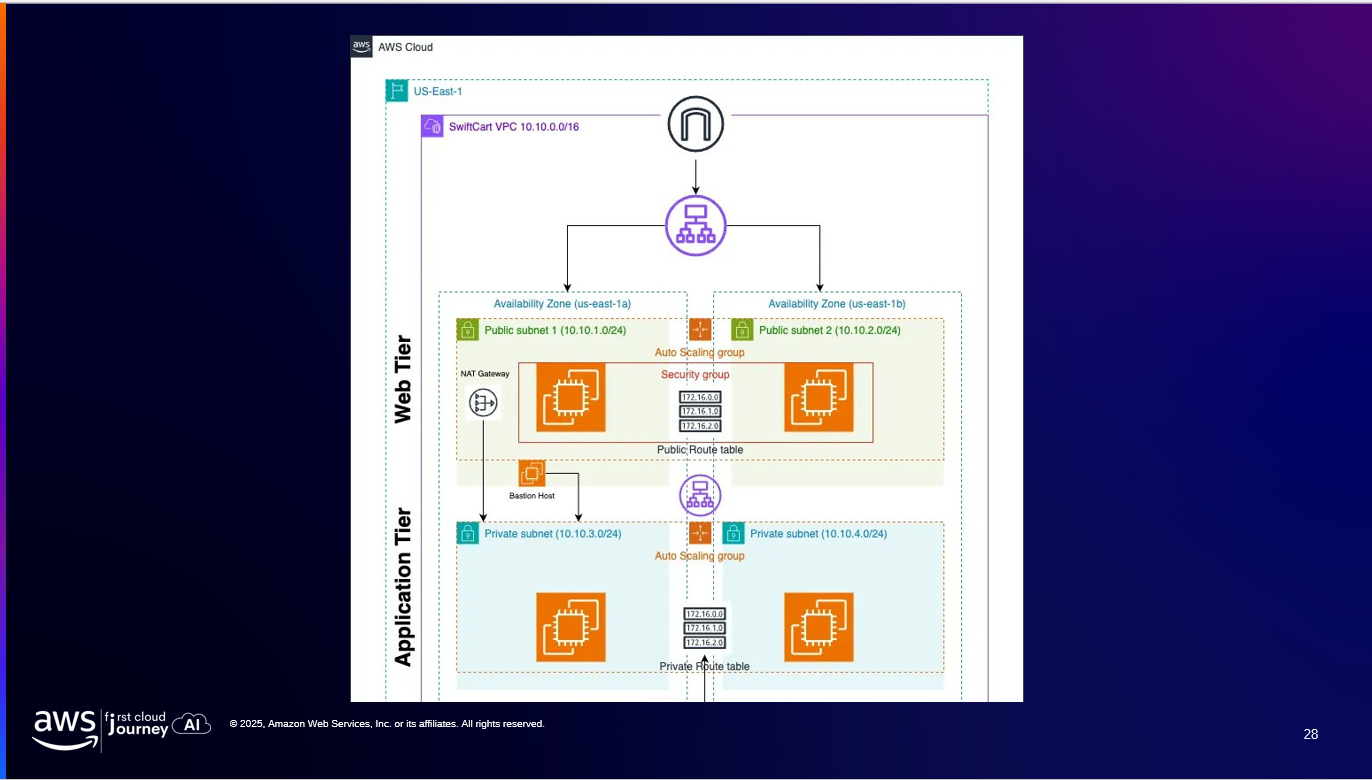
Session 3: Infrastructure as Code with Terraform on AWS
The third session focused on Infrastructure as Code as a modern alternative to manual cloud provisioning (ClickOps), emphasizing automation, consistency, and reproducibility.
Main takeaways:
- IaC mindset: Define cloud infrastructure using code to reduce manual errors and improve collaboration.
- CloudFormation fundamentals: Templates, stacks, template anatomy (including Parameters, Mappings, Conditions, and Outputs), and drift detection. It was also noted that services like AWS Amplify utilize CloudFormation under the hood.
- AWS CDK concepts: Construct levels (L1, L2, L3), construct tree, and deployment workflow with CDK CLI. A key advantage of CDK is its support for real programming languages like TypeScript, Python, Java, C#/.Net, and Go.
- Terraform fundamentals: HCL structure, project layout (basic and advanced), execution flow (
init,validate,plan,apply,destroy), state management, and its strength in multi-cloud deployments. - Tool selection criteria: Choosing IaC tools based on cloud strategy (One Cloud or Many), team skill set, and ecosystem compatibility. Other alternatives like OpenTofu and Pulumi were also briefly mentioned.
This session provided a clear comparison between AWS-native and multi-cloud IaC approaches, which is highly useful for selecting tools in real projects.
Outcomes and Value Gained
Through this event, I gained a broader and more connected view of modern cloud engineering:
- How to design and operate containerized systems with Kubernetes.
- How to reason about fault tolerance and high concurrency at the application-runtime layer using Elixir/OTP.
- How to manage infrastructure lifecycle with IaC tools across AWS and multi-cloud contexts.
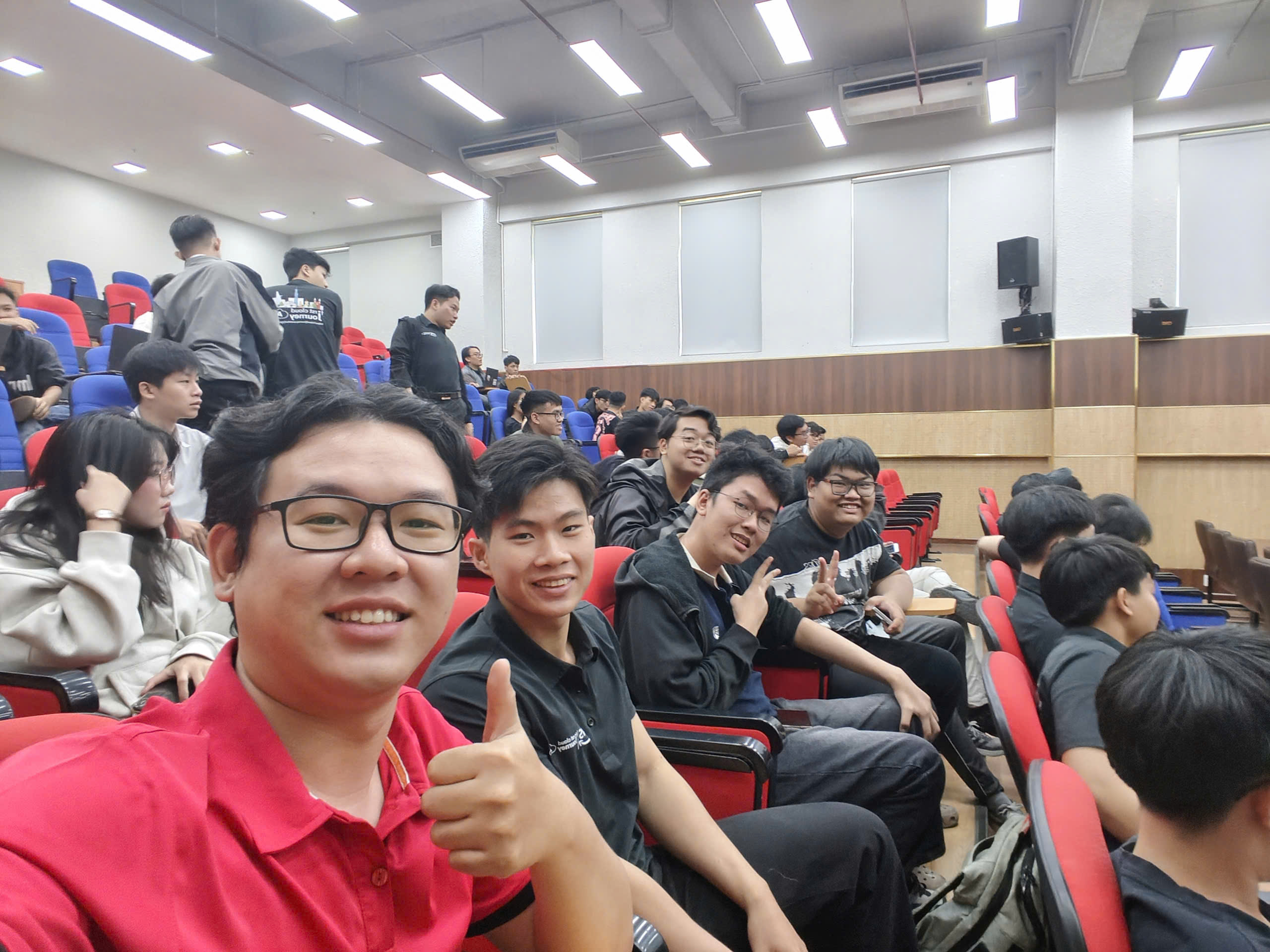
The event also clarified a practical roadmap: start from local Kubernetes practice, apply IaC consistently for deployments, and evaluate resilient runtime technologies such as Elixir when building highly concurrent services.
Overall, Cloud Mastery 2026 #2 delivered a well-balanced combination of architecture principles, implementation practices, and real-world engineering trade-offs across Kubernetes, IaC, and resilient backend systems.