Proposal
1. Project Overview
MyFit is a comprehensive technology platform designed to support users throughout their health management and fitness journey. To deliver a smooth and reliable experience, the system is built on three core foundations:
- User Experience (Frontend): An intuitive and user-friendly interface that allows users to easily track progress, personal metrics, and interact with features.
- Core Processing System (Backend): A powerful data processing platform ensuring accuracy, real-time synchronization, and maximum data security.
- Cloud Infrastructure: Fully deployed on AWS cloud infrastructure.
By leveraging Cloud Managed Services, MyFit:
- Optimizes operational costs
- Ensures 24/7 system availability
- Supports seamless scalability as user demand grows
2. Objectives
2.1 Overall Objectives:
- Build a fitness application supporting both mobile and web platforms.
- Ensure stable operation on AWS infrastructure.
- Guarantee availability and scalability based on cloud resources.
- Provide a seamless user experience from login to health tracking.
- Establish a clear, repeatable deployment process to reduce operational errors.
2.2 Specific Deliverables:
- Backend API secured using JWT and Cognito
- Frontend served via CloudFront for fast and stable delivery
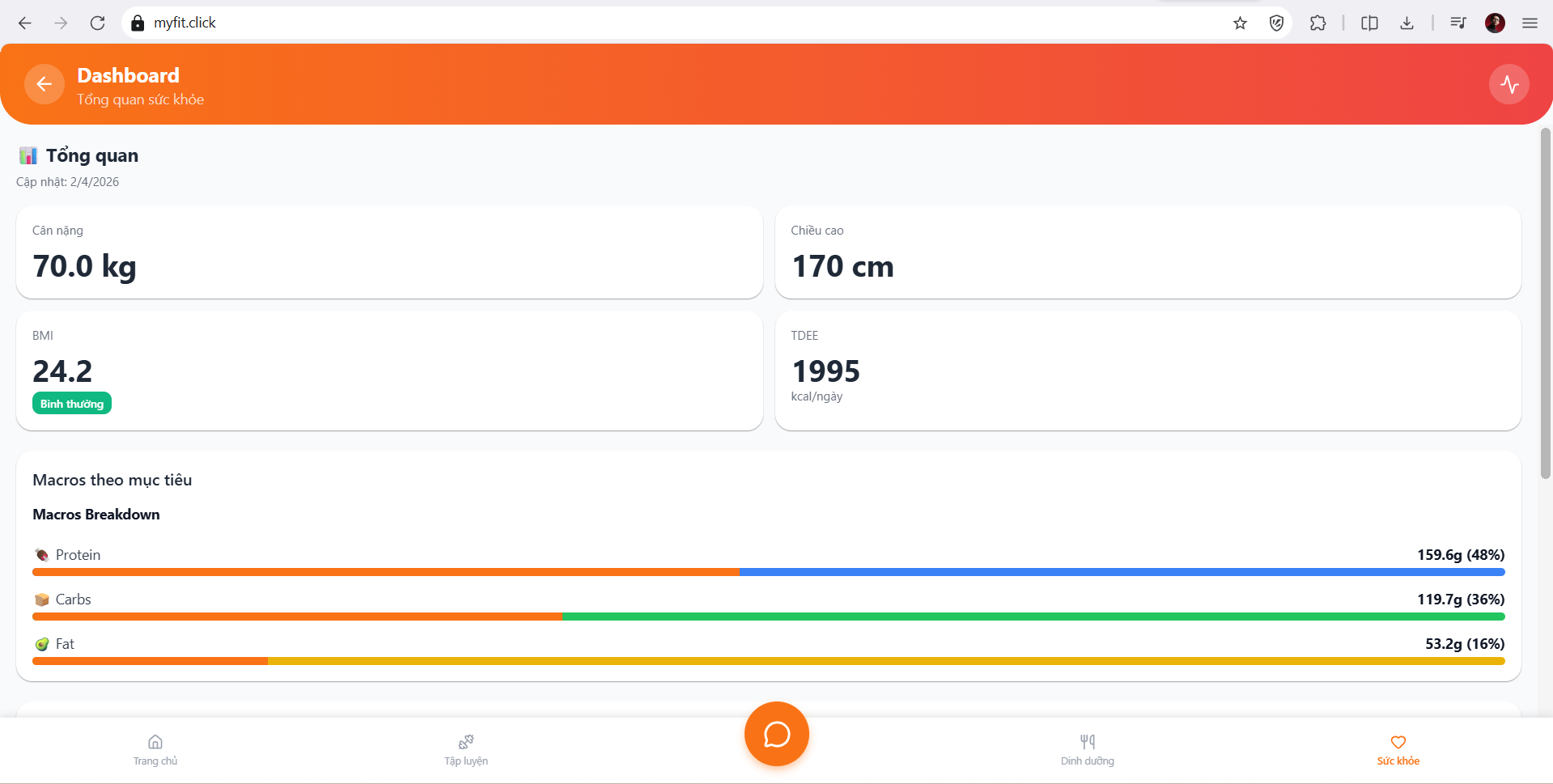
- Health and workout tracking dashboard
- Separate deployment pipelines for infrastructure and application with rollout monitoring
3. Problems to Solve
Key challenges addressed in this project:
- Integration: Synchronizing configurations across frontend, backend, and infrastructure
- Security: Preventing credential leaks, controlling API access, minimizing unnecessary public exposure
- Operations: Monitoring logs and system health to detect issues early
- Scalability: Ensuring system performance under increasing user load
4. Solution Architecture
4.1 Idea and Objectives
Context and Problem
The system is designed to manage personal health and workout planning.
System Capabilities:
- Manage user profiles and authentication data
- Track body metrics and calculate health indicators
- Manage workout plans, sessions, and logs
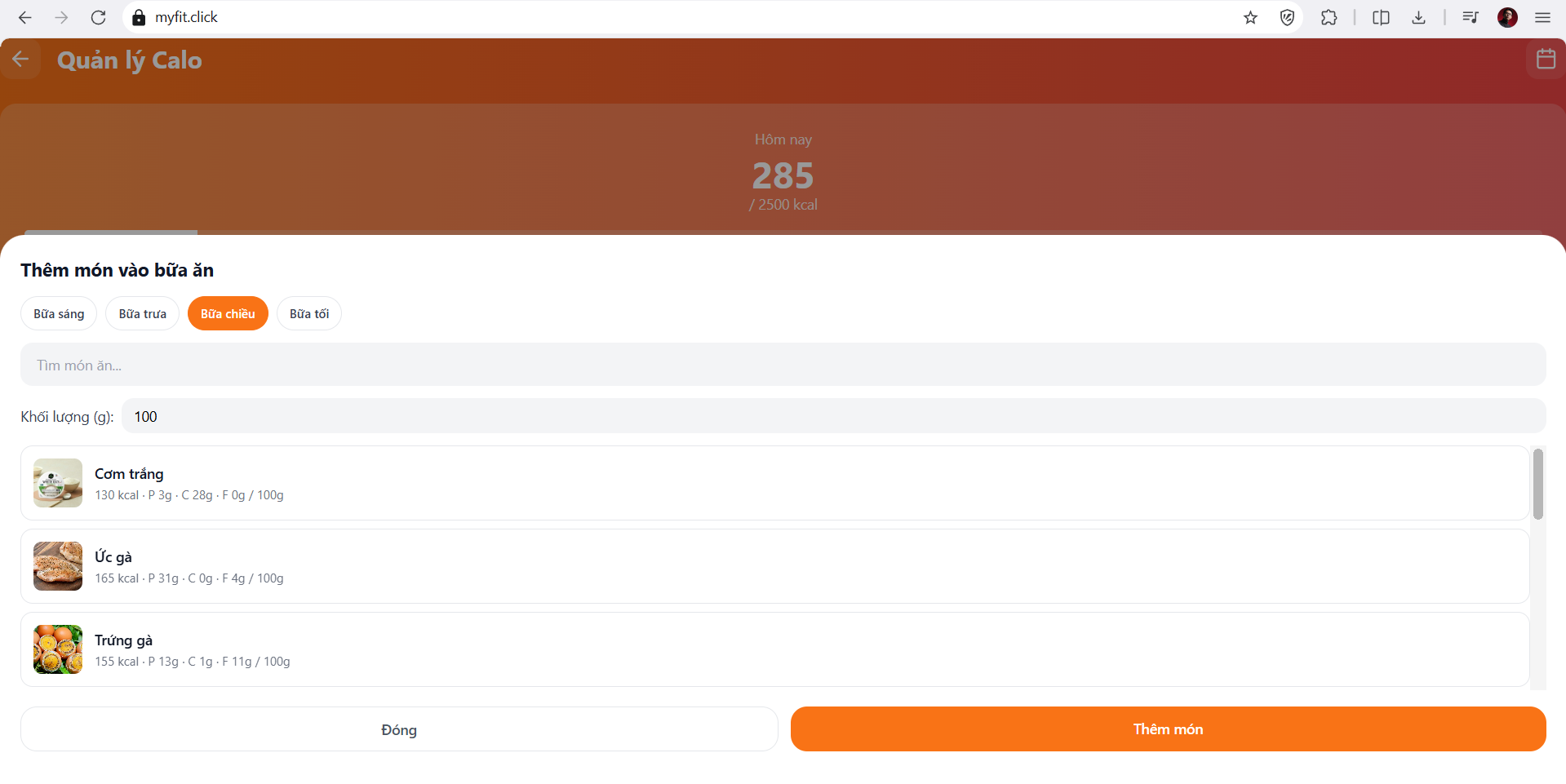
- Manage nutrition data by meal and by day
Target Users:
- Individuals tracking health and fitness
Problems Addressed:
- Centralize health data in a single platform
- Reduce manual operations via APIs and real-time features
- Ensure deployability, operability, and scalability on AWS
AWS/FCAJ Use-case Alignment:
- A clear cloud-native use case leveraging AWS managed services
- Focused on secure, scalable, and monitored cloud deployment
Success Criteria
Expected Outcomes:
- Frontend delivered via CloudFront
- Backend APIs running on ECS Fargate
- Authentication via Cognito Hosted UI and JWT
- Centralized logging via CloudWatch
Success Metrics:
- Users can log in and access core APIs
- Core flows (workout, health metrics, nutrition) work end-to-end
- ECS service rollout completes successfully and remains stable
- Issues can be quickly traced via logs and health checks
4.2 System Architecture:
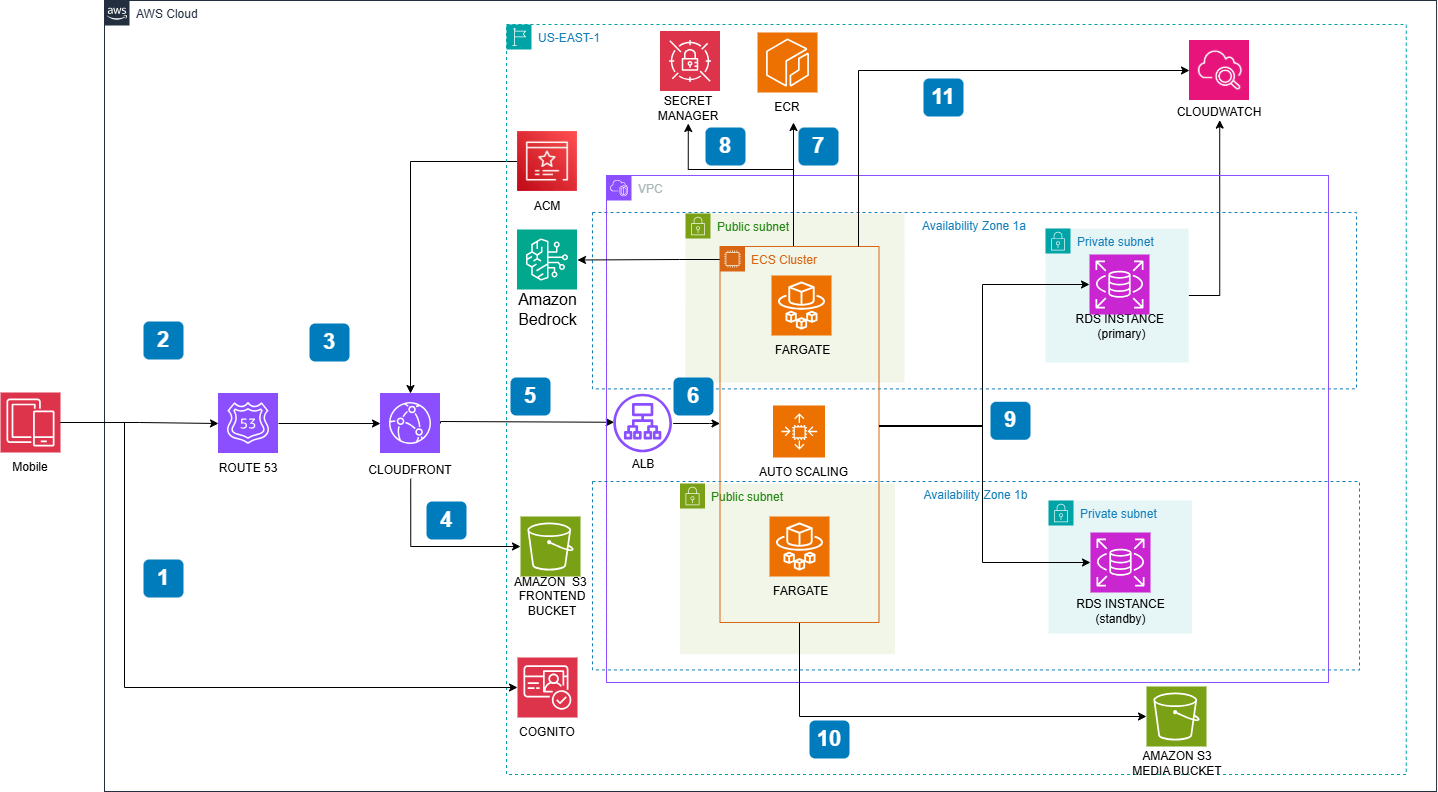
4.3 Main Data Flow:
- Authentication Layer: Mobile app connects directly to Amazon Cognito for identity and login management.
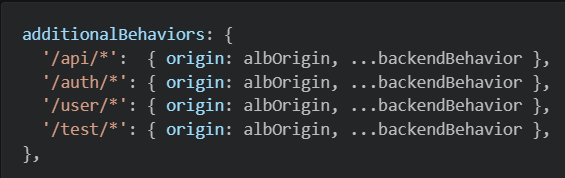
- Access & Distribution Layer: Requests go through Route 53 (DNS) to CloudFront (CDN). CloudFront serves frontend from S3 or routes API requests to ALB.
- Backend Processing Layer: ALB balances traffic and forwards requests to Spring Boot containers on ECS Fargate. ECS pulls images from ECR and retrieves secrets from Secrets Manager.
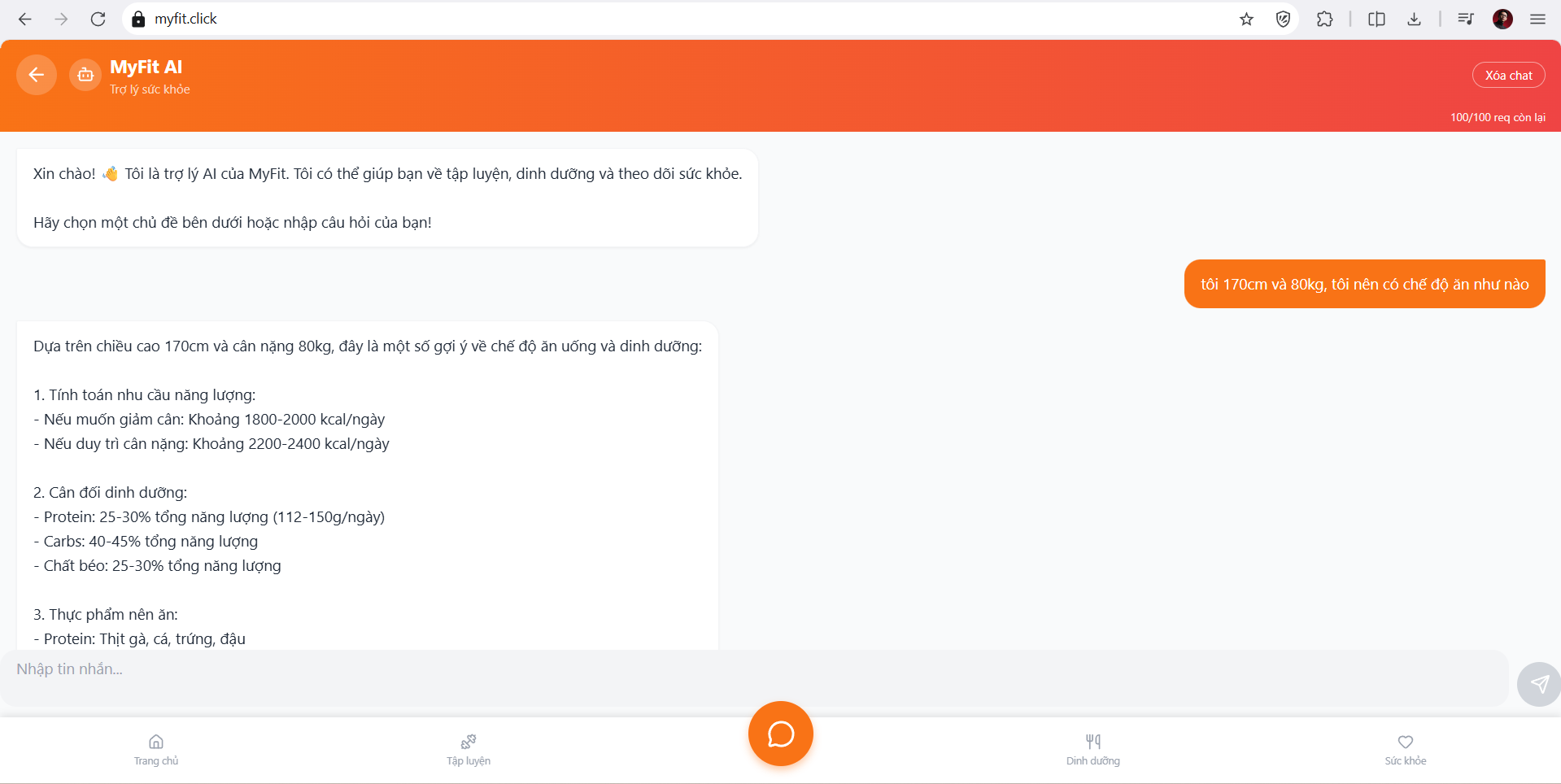
- Data Layer: Fargate handles logic, interacts with RDS PostgreSQL and S3 Media Bucket. Amazon Bedrock is integrated as an AI chatbot.
4.4 AWS Services and Rationale:
Services Used:
- Amazon CloudFront – CDN for low latency and unified public endpoint
- Amazon S3 – Storage for static frontend and media files
- Application Load Balancer (ALB) – HTTP/HTTPS load balancing
- Amazon ECS Fargate – Managed container execution with auto scaling
- Amazon RDS PostgreSQL – Managed relational database
- Amazon Bedrock – AI chatbot integration
- Amazon Cognito – User authentication and identity management
- Amazon ECR – Container image registry
- Amazon CloudWatch – Centralized logging and monitoring
- AWS Route 53 & ACM – DNS and SSL/TLS certificate management
Why not Lambda/API Gateway:
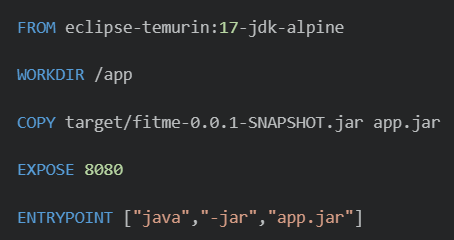
- Backend is a Spring Boot monolith suited for container-based deployment
- Avoids complexity of serverless decomposition in early stages
- Speeds up delivery and simplifies operations
4.5 Security and IAM:
Principles:
- Least privilege for runtime roles
- No hard-coded credentials
- Minimize public exposure of data resources
Implementation:
- ECS Task Execution Role for image pulling and logging
- ECS Task Role limited to required S3 access
- Database credentials stored in Secrets Manager
- RDS deployed in private subnet
- ALB restricted to CloudFront traffic
- Backend validates Cognito access tokens
4.6 Scalability and Operations:
Scaling:
- ECS auto scaling based on CPU (min 2, max 4 tasks)
- Independent scaling for frontend and backend
Monitoring:
- CloudWatch Logs for containers
- RDS logs for query monitoring
- ALB health checks for instance status
4.7 CI/CD & IaC
To optimize operations and reduce manual errors:
Infrastructure as Code (IaC): AWS CloudFormation for consistent infrastructure management
CI/CD Pipeline:
- Developer pushes code to GitHub
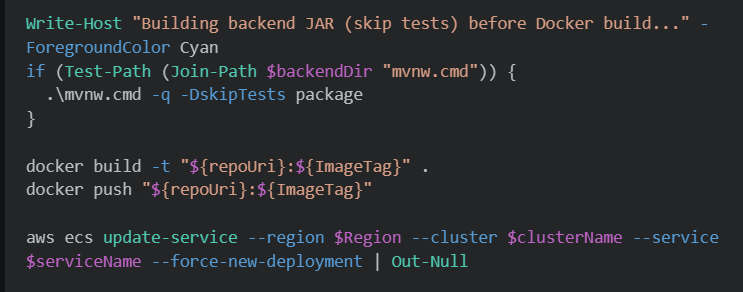
- GitHub Actions builds Docker image and pushes to Amazon ECR
- ECS updates service using rolling deployment with zero downtime
5. Code Snippet
5.1 Dockerfile Backend
5.2 CDK Route API via CloudFront
5.3 Deploy Script
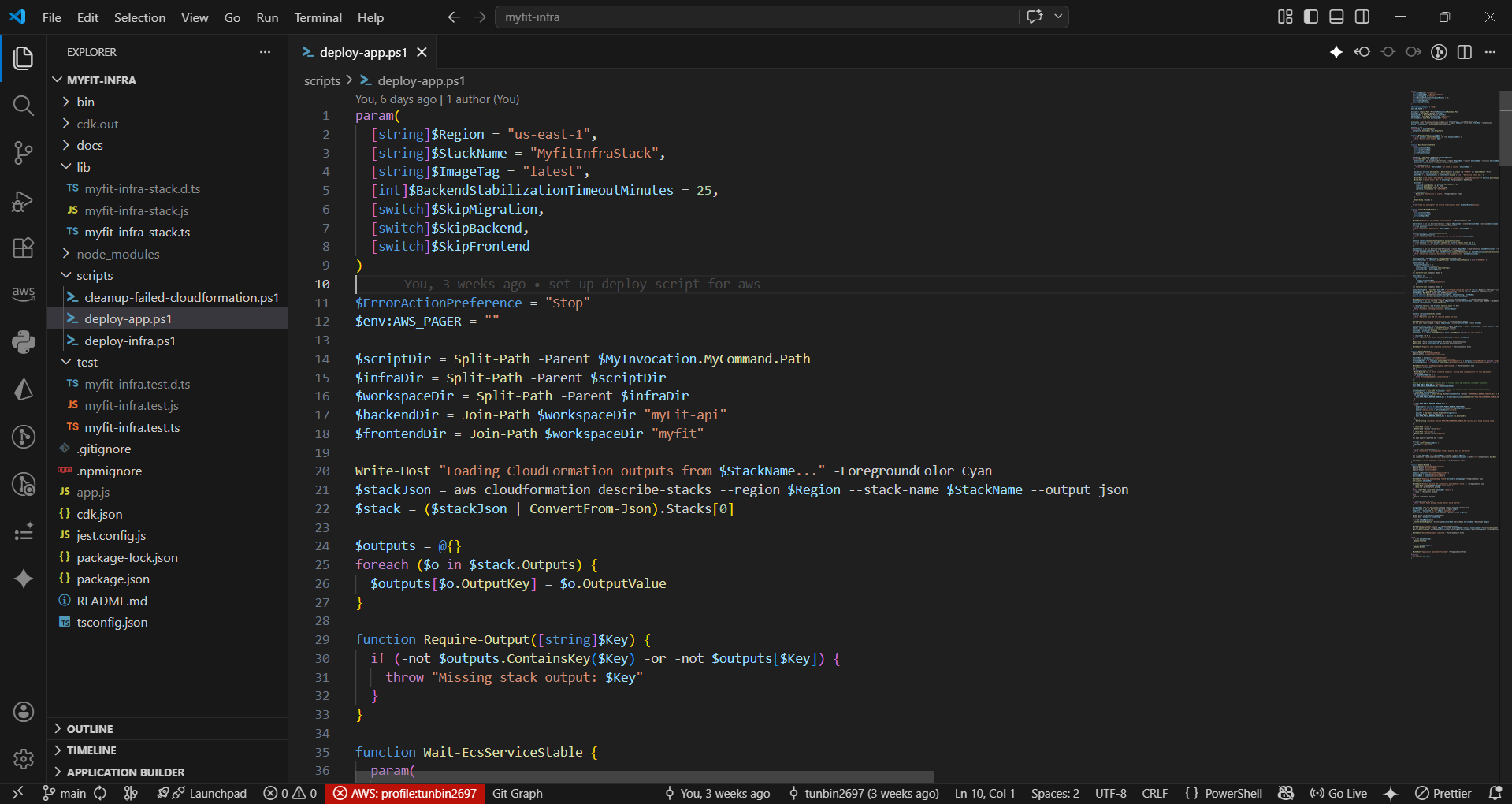
5.4 Stack Initialization
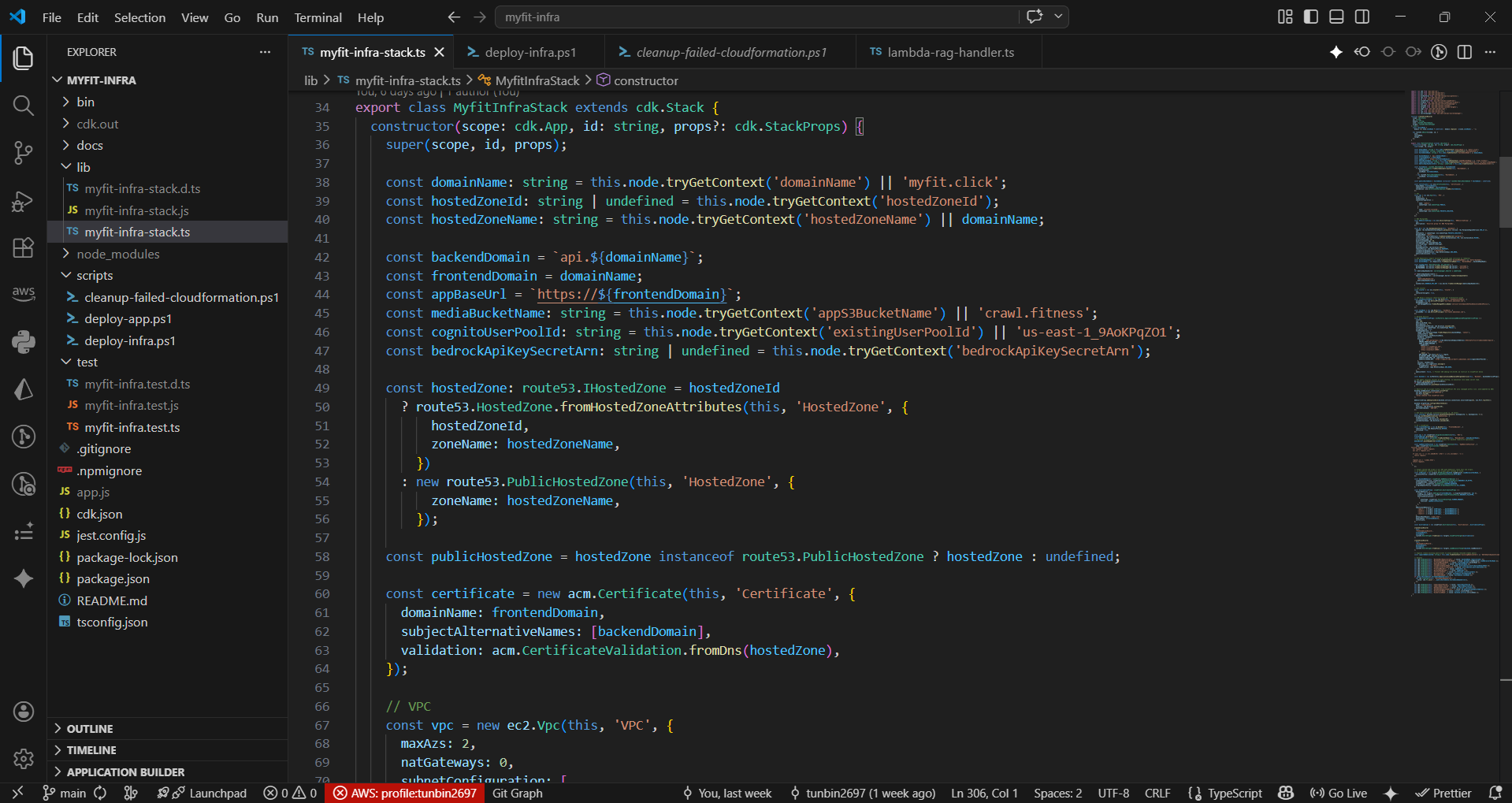
5.5 Application Screens
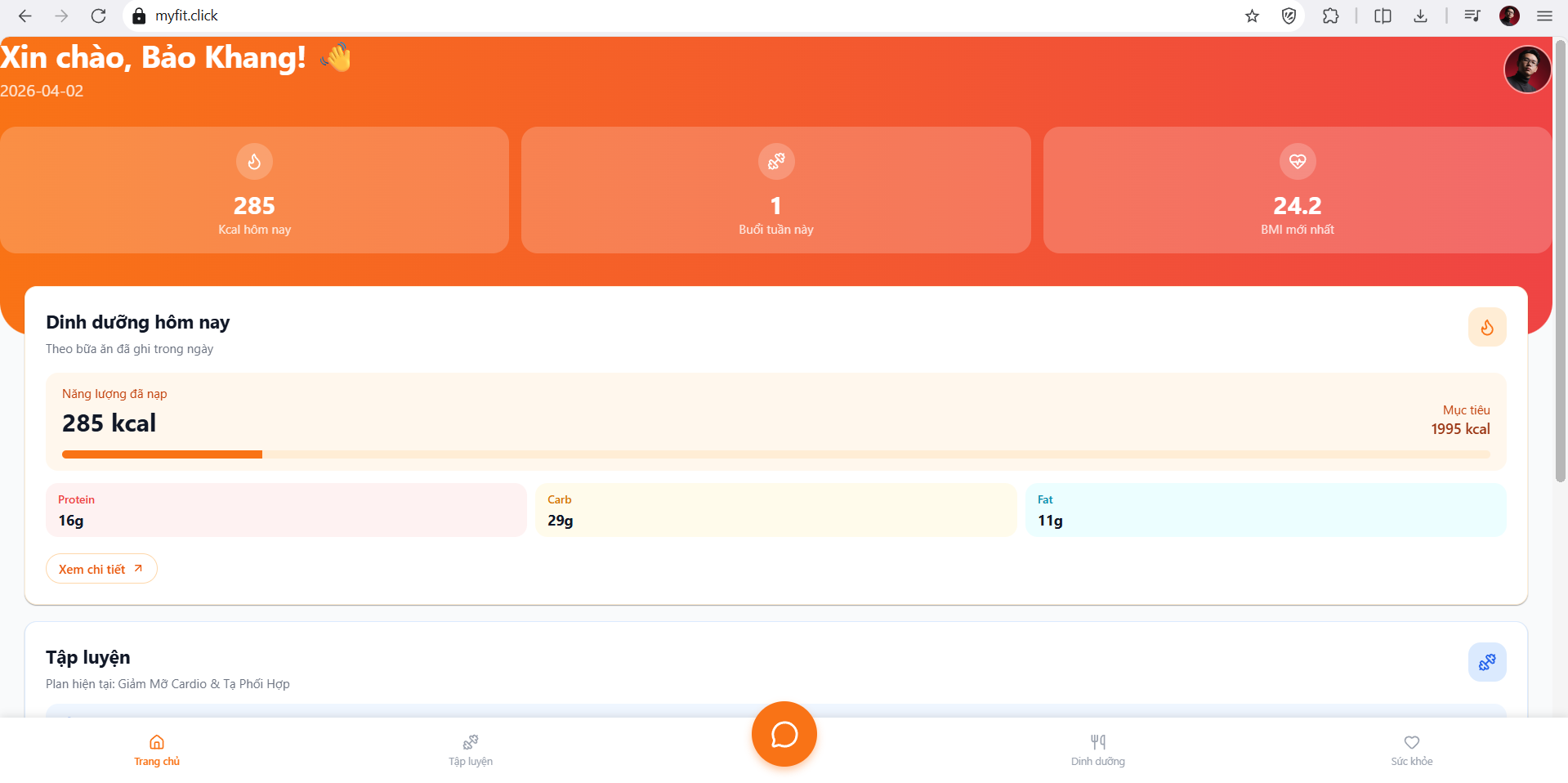
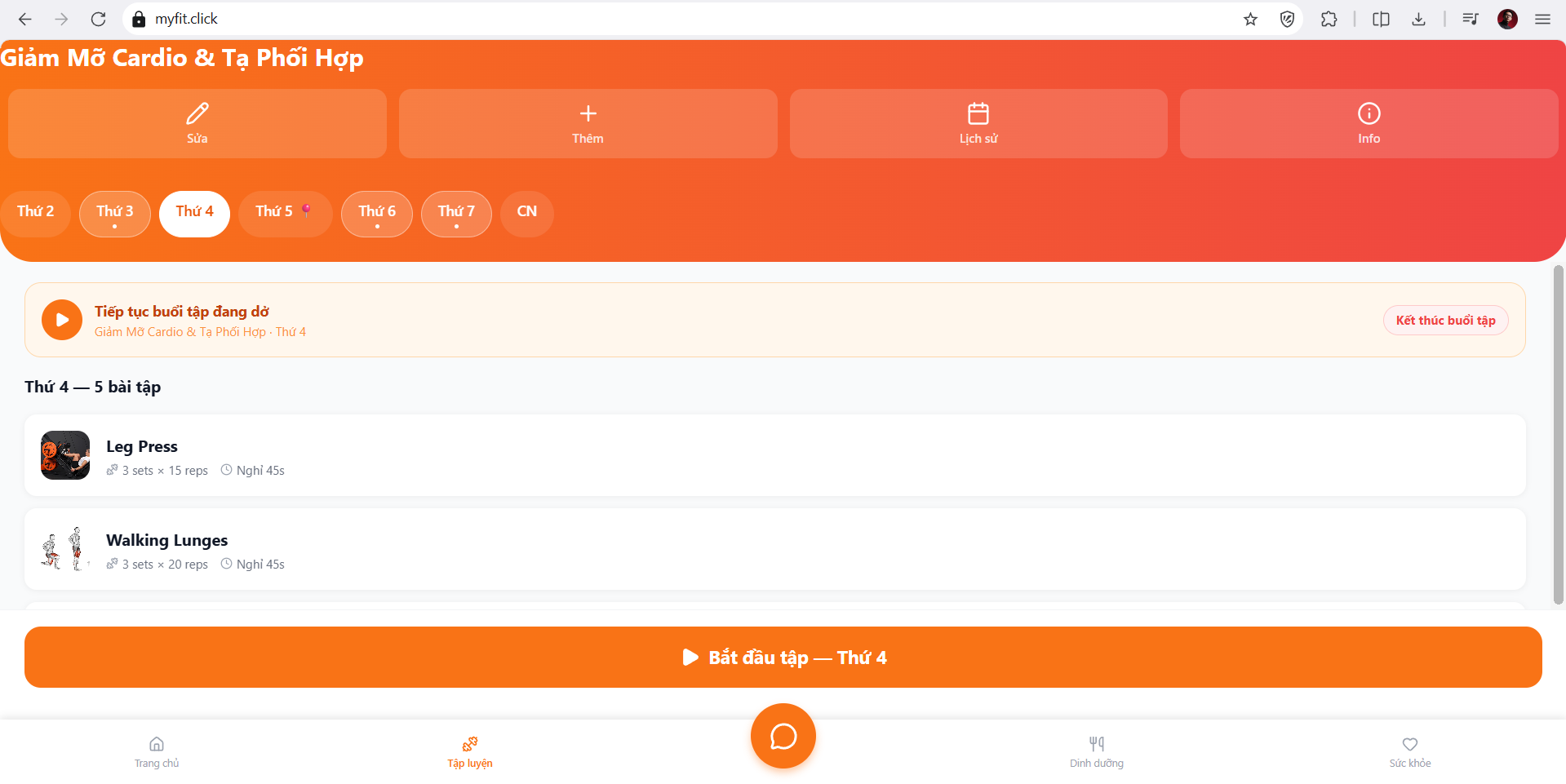
6. Estimated Cost
Region: us-east-1
| Category | Service | Configuration | Monthly Estimate |
|---|---|---|---|
| Frontend CDN | CloudFront | ~10GB | $1–5 |
| Storage | S3 | 2 buckets | $0.5–2 |
| Backend | ECS | 2 tasks | $15–20 |
| Database | RDS | t4g.micro | $30–35 |
| Registry | ECR | 1GB | $0.1–1 |
| Logging | CloudWatch | logs | $5–15 |
| Secrets | Secrets Manager | 2 secrets | ~$1 |
| Load Balancer | ALB | 1 ALB | $18–22 |
| Auth | Cognito | free tier | $0 |
| DNS + SSL | Route53 + ACM | $0.5–1 |
Total: ~$71–100/month
Notes:
- No NAT Gateway → saves ~$32/month
- Actual cost depends on traffic and usage
7. Risks and Mitigation
| Risk | Impact | Priority | Mitigation |
|---|---|---|---|
| Sensitive data exposure | High | P0 | Use Secrets Manager |
| Wrong deploy path | Medium-High | P0 | Pre-check scripts |
| OAuth mismatch | High | P0 | Sync environments |
| Health check inconsistency | Medium | P1 | Standardize endpoint |
| Cost increase | Medium | P1 | Budget alerts |